The Institute of the Information Society at the Ludovika University of Public Service regularly conducts representative domestic research in the field of information society. The questionnaires include both questions suitable for longitudinal research and new topics each year. In this research report, we present the responses to the questions on smartphone addiction in Hungarian society that we consider most relevant from a telephone survey conducted in November 2021. This is the first time that such a survey has been conducted since the Institute was established in 2019. The research is representative of the Hungarian population by age, gender, education and type of settlement.
1. We are dependent on smartphones – and many people feel this is an addiction
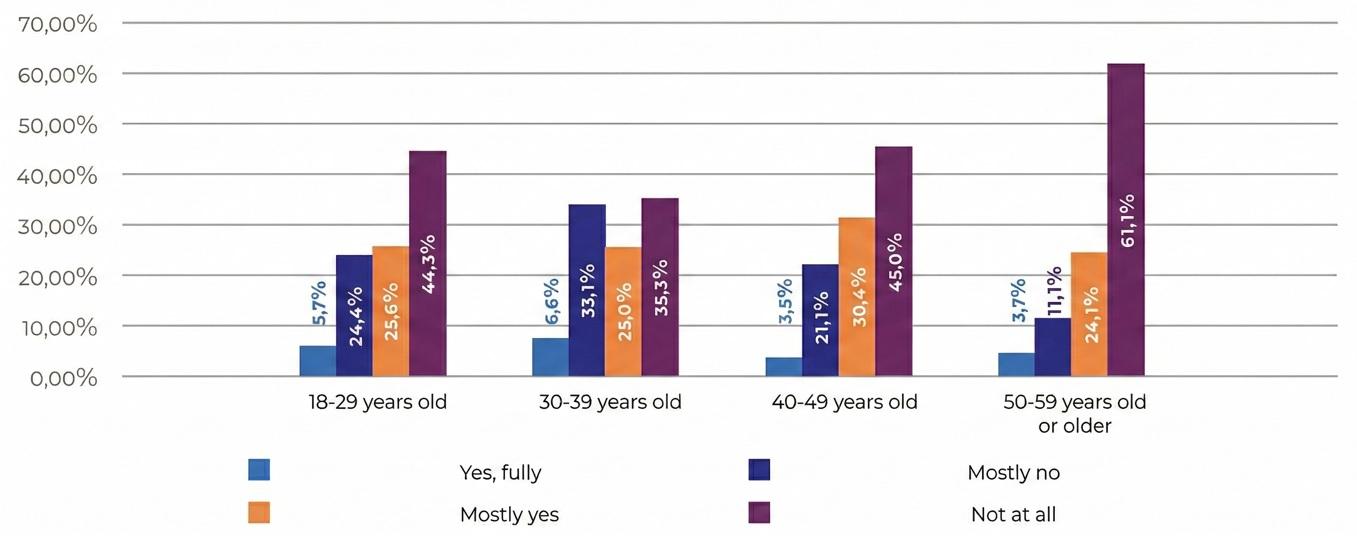
4.3% of the total population consider themselves completely dependent on smartphones, which represents nearly half a million people in Hungary. One-fifth of the population (20.6%) consider themselves to be dependent rather than not. These values are highest among the 30-39 age group (and not among the youngest respondents).
In terms of the total sample, one in four respondents considers themselves to be smartphone-dependent, and this proportion is even higher among younger age groups: almost one in three (30.1%) of those aged 18-29, while four out of ten respondents (39.7%) in the 30-39 age group felt this way about themselves. The data shows much lower results among the oldest age group, but it is telling that even among those over 60, the proportion of those who consider themselves addicted is almost 16%.
FIGURE 1: DO YOU CONSIDER YOURSELF A SMARTPHONE ADDICT?
LUPS IIS November 2021 data collection, representative, percentage breakdown
2. Micro-time in action: many younger people reach for their phones even while driving, as soon as they have a free moment
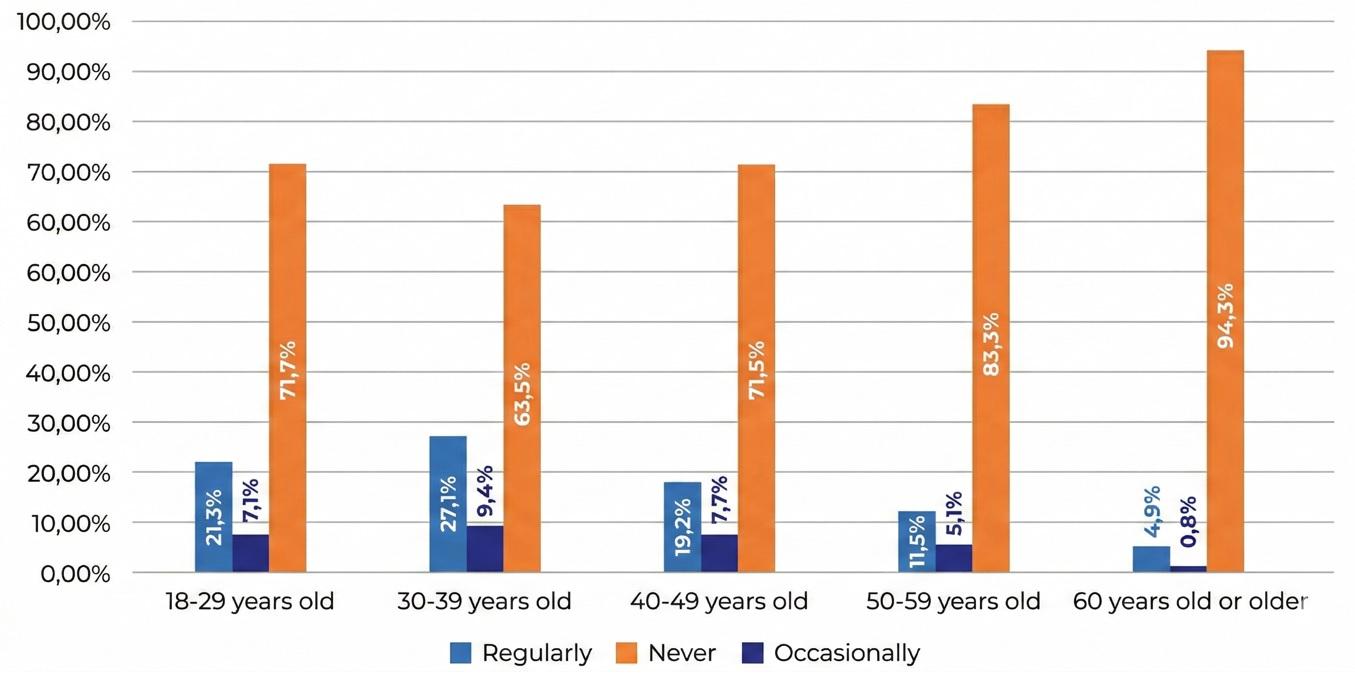
We also measured the extent of smartphone use in everyday activities. According to the results, one in seven (16.8%) drivers regularly reach for their cell phones in traffic jams or at red lights to read messages or news, with the 30-39 age group being the most active in this regard. One in five (21.3%) of those under 30 and more than one in four (27.1%) of those aged 30-39 do the same in such situations.
FIGURE 2: HAVE YOU CHECKED YOUR MESSAGES AND/OR READ THE NEWS ON YOUR SMARTPHONE WHILE DRIVING, FOR EXAMPLE IN TRAFFIC OR AT A RED LIGHT, IN THE PAST MONTH?
LUPS IIS November 2021 data collection, representative, percentage breakdown, among drivers
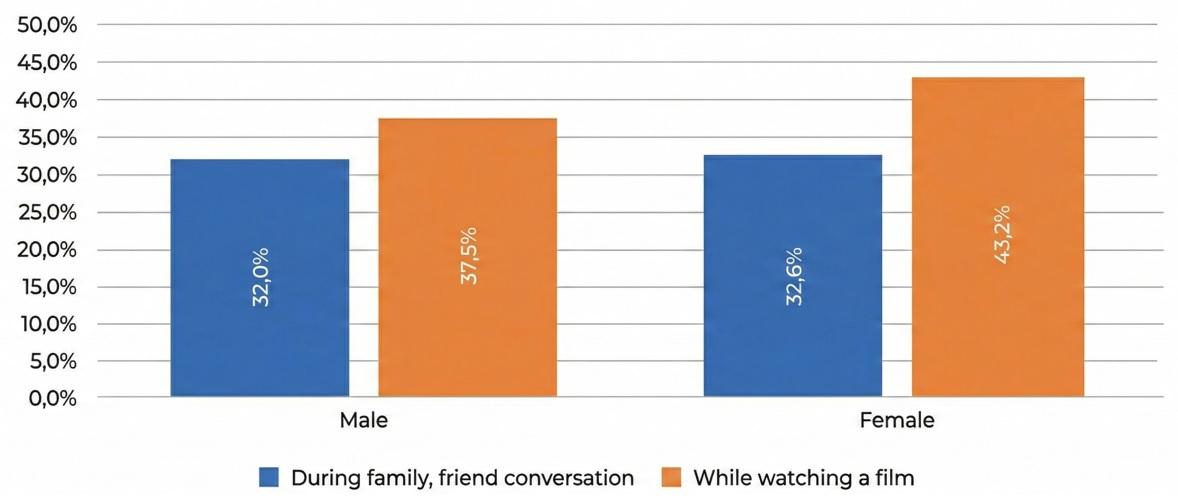
Even more frequently than the above, smartphone use appears as a substitute activity during conversations with family and friends: one in five respondents did so several times during similar opportunities in the month preceding the survey, and among the younger respondents, four out of ten (18-29 year olds: 40.9%; 30-39 years old: 38.2%) read news or messages on their phones at least once. These proportions are even higher when watching movies or eating: practically every second person under the age of 40 agrees that they did not watch a movie or eat a meal in the month in question without glancing at their phone at least once.
FIGURE 3: HAVE YOU CHECKED YOUR MESSAGES AND/OR READ THE NEWS ON YOUR SMARTPHONE DURING CONVERSATIONS WITH FAMILY OR FRIENDS IN THE PAST MONTH? HAVE YOU CHECKED YOUR MESSAGES AND/OR READ THE NEWS ON YOUR SMARTPHONE WHILE WATCHING A MOVIE IN THE PAST MONTH?
LUPS IIS November 2021 data collection, representative, percentage breakdown
Practically one or two respondents out of a hundred cancel a meeting with friends because they find chatting or browsing social media feeds more important, but for 94% of respondents, spending time on their smartphone did not prevent them from doing their favorite activity even once in the previous month.
3. Many people feel compelled to respond to work emails outside of working hours
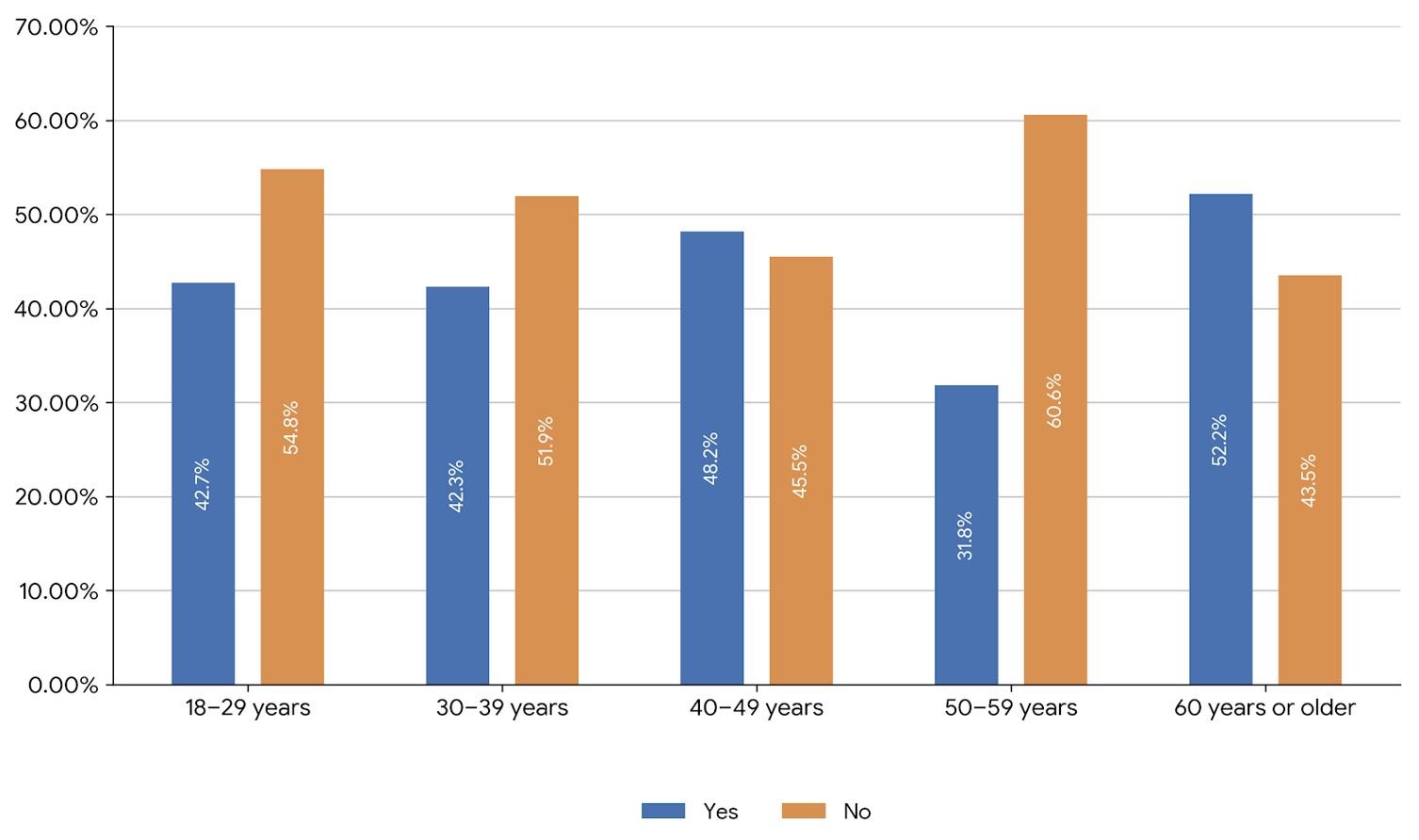
The intertwining of work and leisure time is well illustrated by the fact that four out of ten people feel compelled for some reason to respond to work emails outside of working hours. Among those who consider themselves smartphone addicts, twice as many respond to emails outside of working hours as those who do not respond.
FIGURE 4: WHEN YOU SEE A NOTIFICATION THAT YOU HAVE RECEIVED A WORK EMAIL, DO YOU FEEL COMPELLED TO RESPOND TO IT OUTSIDE OF WORKING HOURS?
LUPS IIS November 2021 data collection, representative, percentage breakdown
The research report was prepared by Bernát Török, Árpád Rab and Tamás Szikora.
The report can be downloaded in Hungarian here.