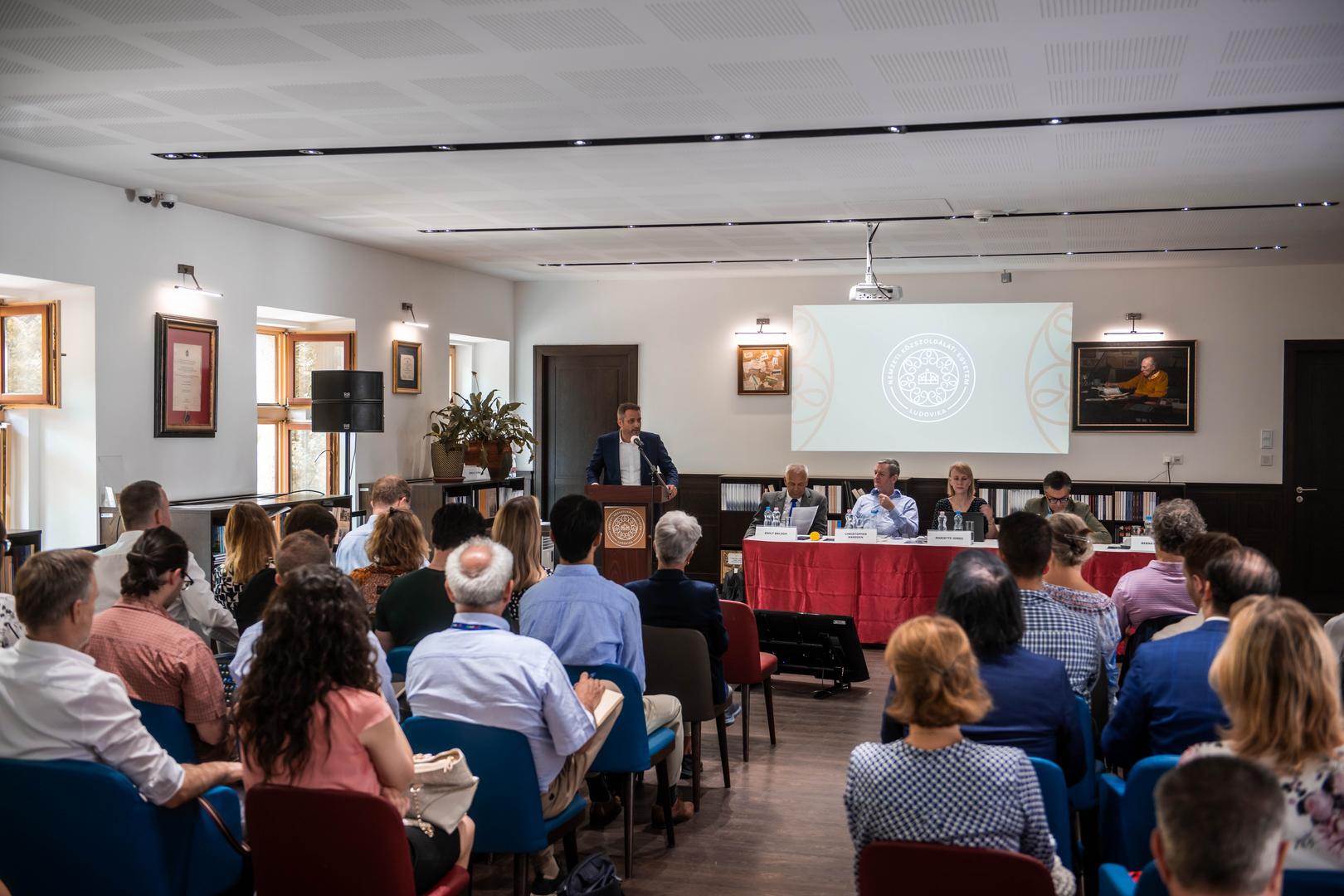
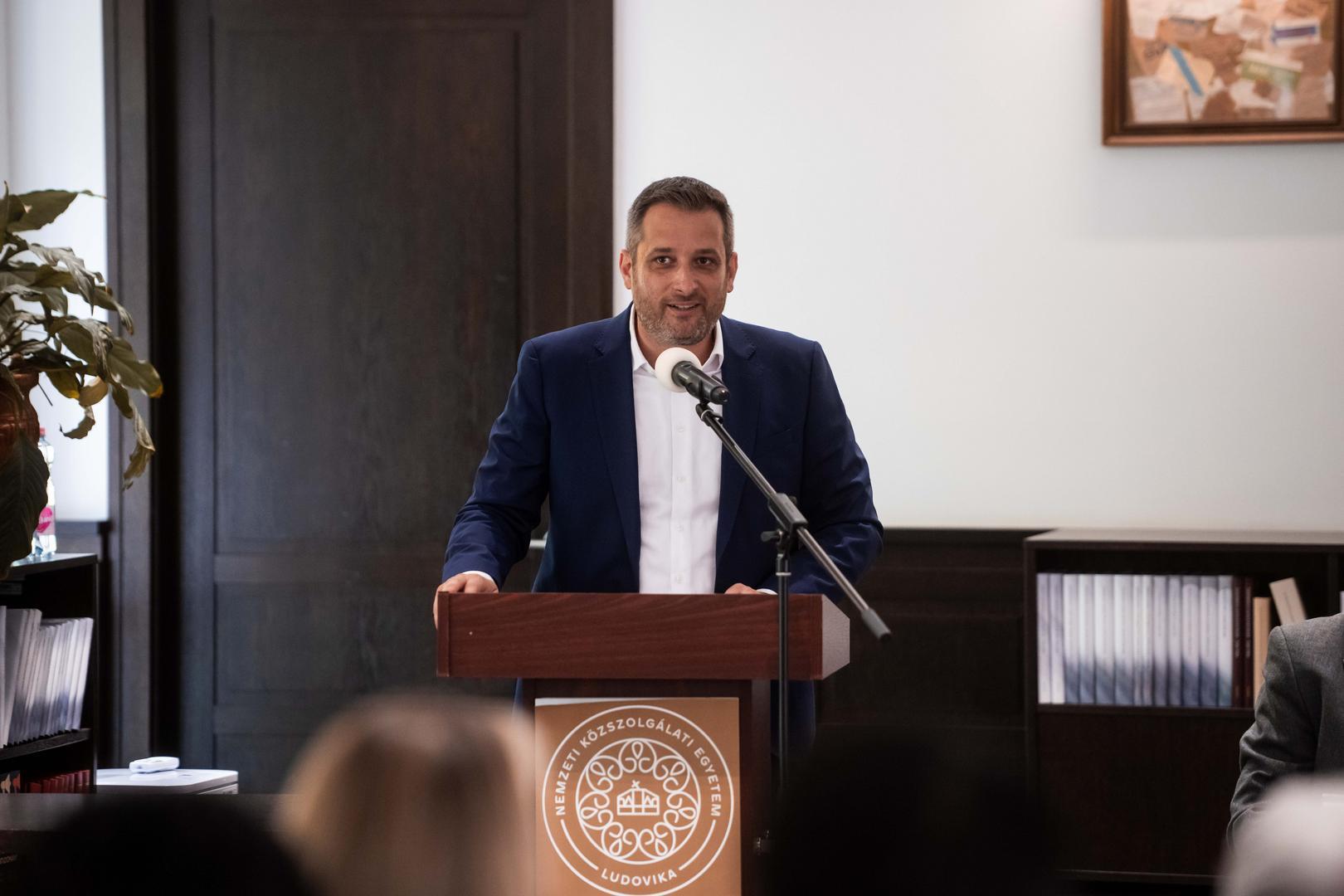
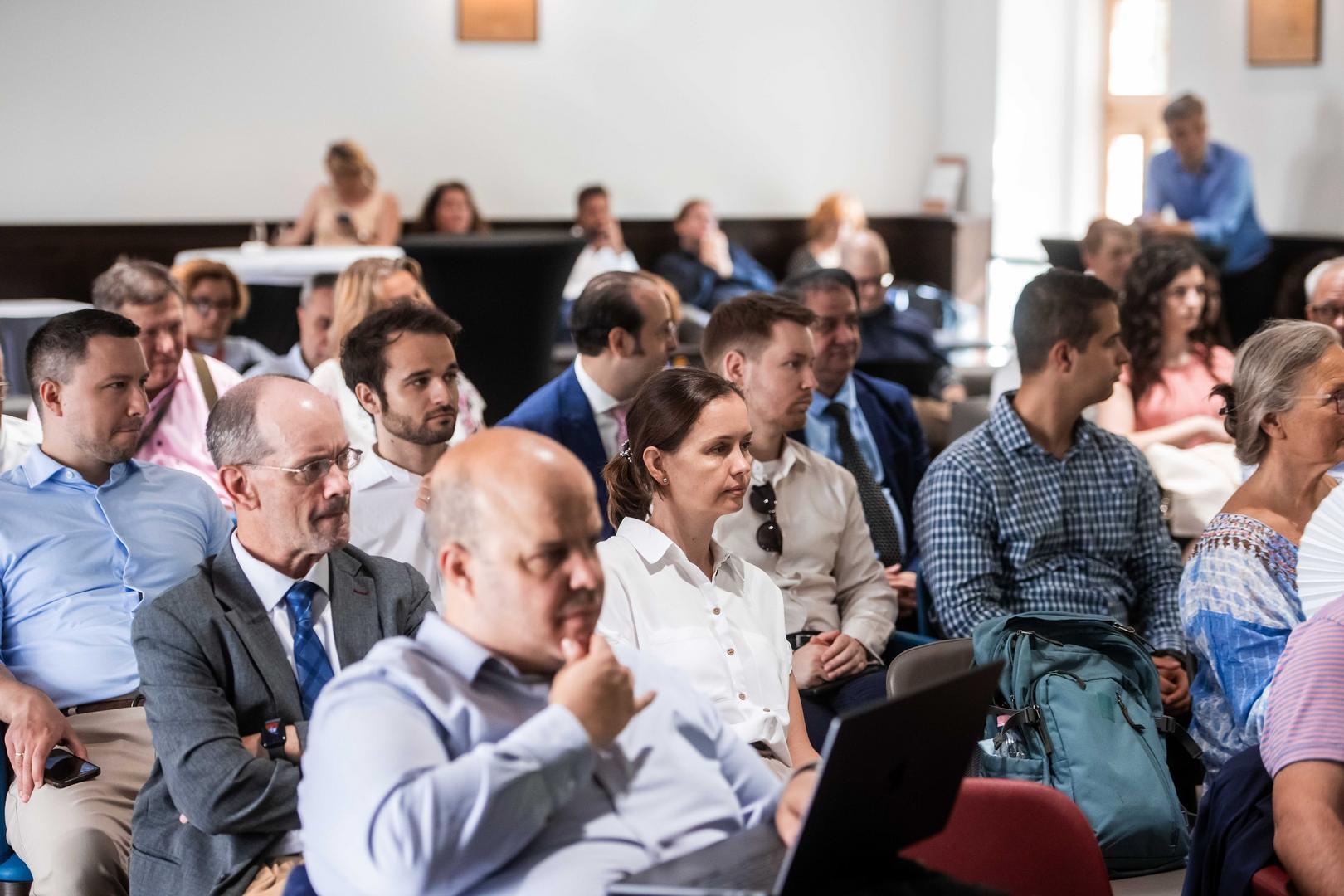
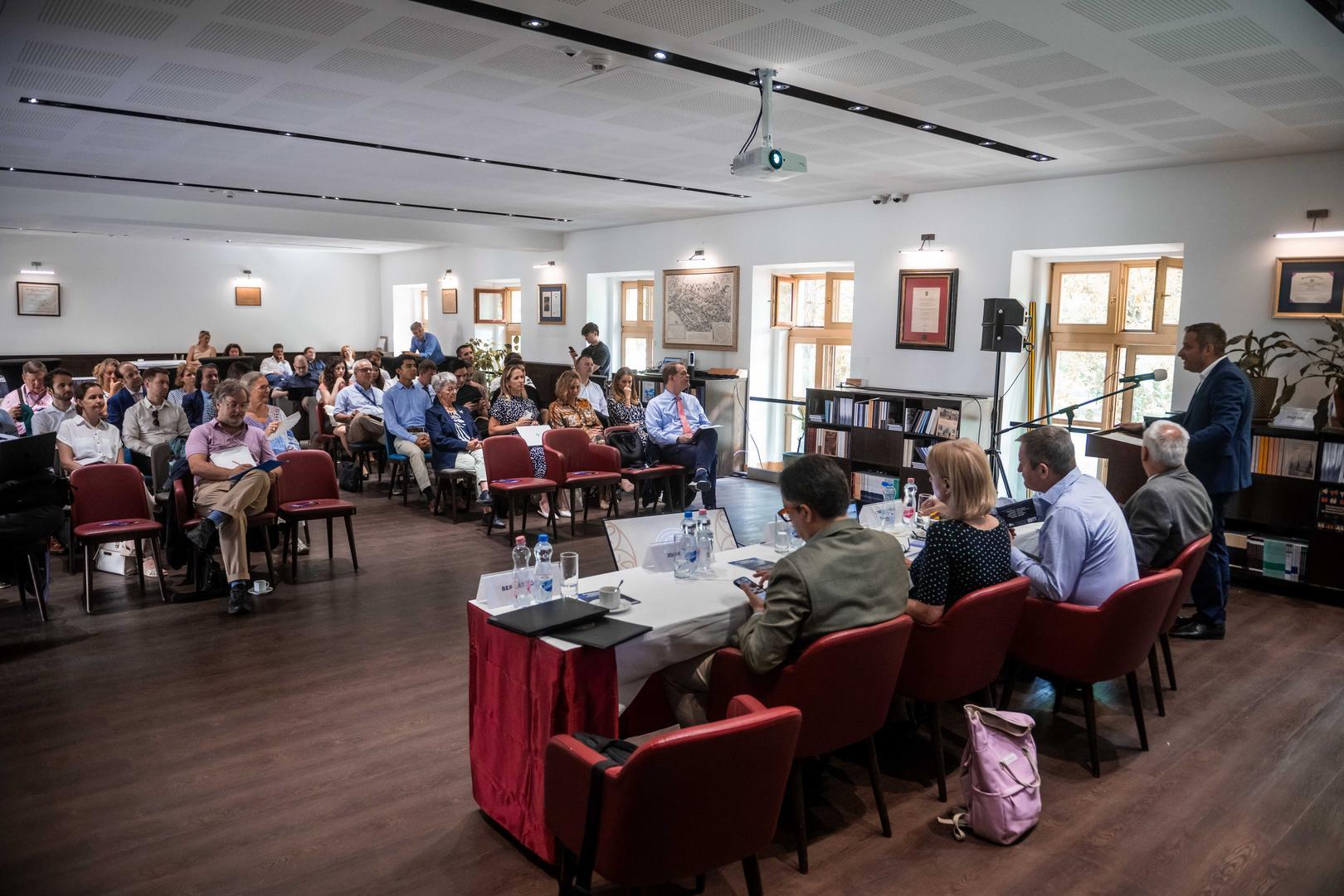

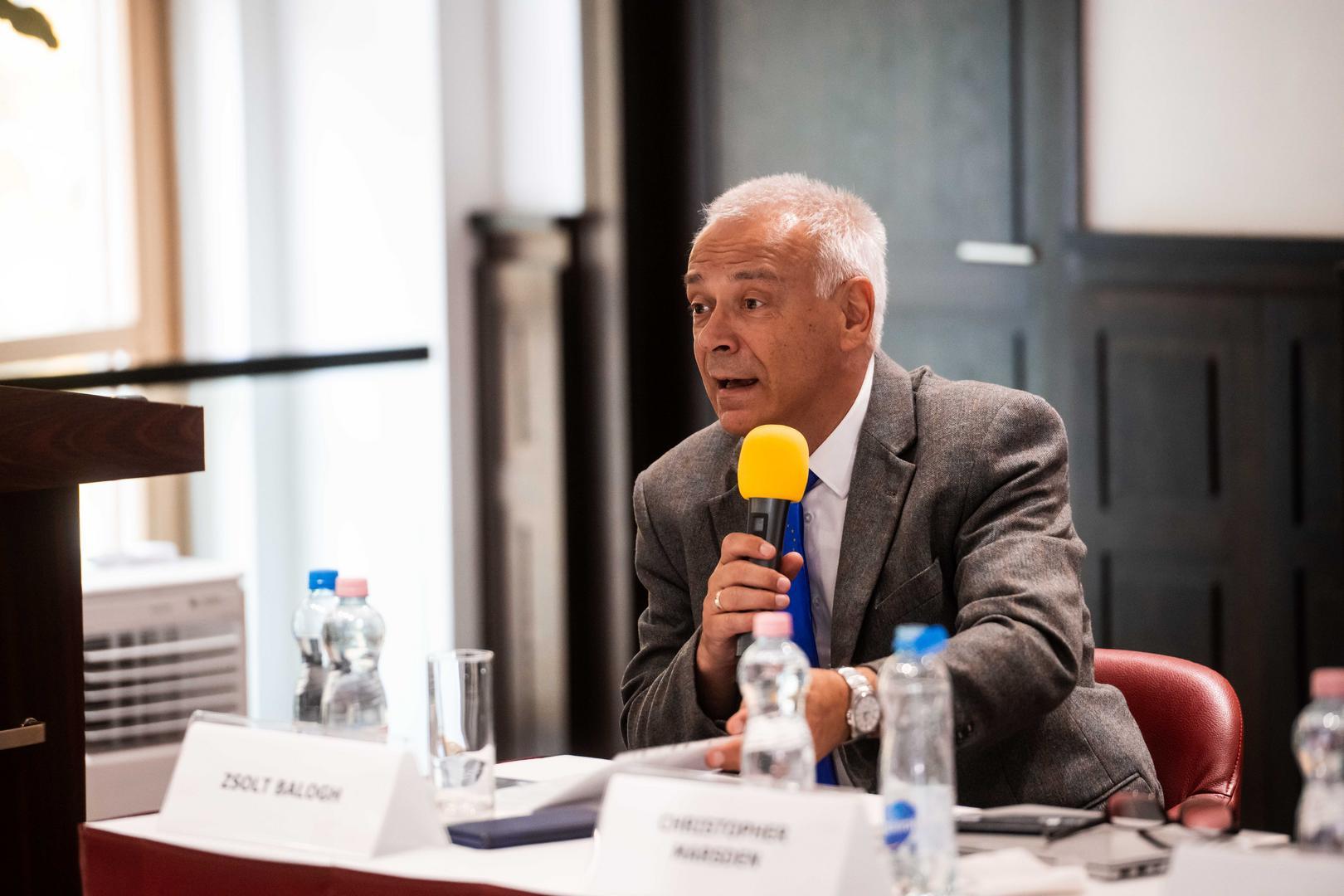
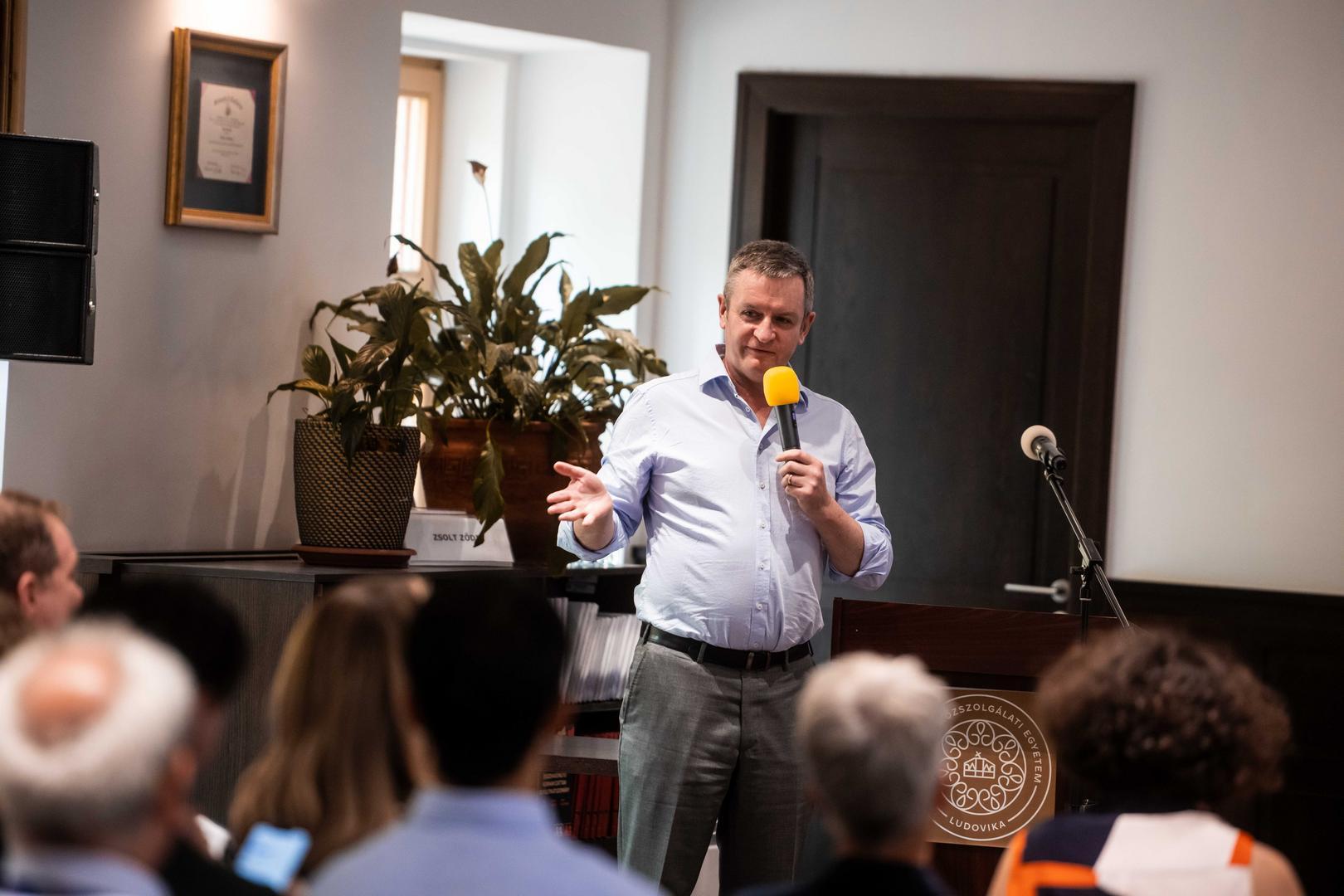

The Institute of the Information Society (IIS), UNESCO Chair on Digital Platforms for Learning Societies once again organized its annual international conference on the regulation of online platforms and their impact on society on July 2 in the John Lukacs Lounge of the Ludovika Side Building at the Ludovika University of Public Service (LUPS).
Now in its fifth year, the academic conference continues to aim at fostering a genuine international dialogue on the social impacts of digital platforms and the regulatory issues they raise, emphasized Bernát Török, Director-General of the Eövös József Research Center at LUPS and Director of the Institute of the Information Society, in his opening remarks. He added that the central theme of this year’s conference is the relationship between government power and digital platforms—that is, the question of how digitization is transforming the relationships between states, market actors, and citizens. Referring to the venue of the event, he recalled the figure of John Lukacs: in his view, the Hungarian-American historian—who had ties to both continents—serves as a fitting symbol of the international exchange of ideas that the conference also aims to promote. John Lukacs often said: “Hungary is my motherland, America is my home; Hungary is my mother, America is my wife.” This sentiment perfectly captures the importance of building connections between different worlds, cultures, and perspectives—an endeavor that also characterizes the global professional dialogue on digital platforms. The Director General emphasized that the rise of digital technologies has fundamentally transformed the scope of action available to states. While many previously believed that cyberspace fell outside the scope of traditional government regulation, it has now become clear that governments are capable of influencing the functioning of the digital environment. At the same time, a key question remains: where can a balance be struck between state regulatory objectives, the autonomy of platform providers, and the protection of citizens’ freedoms? Bernát Török expressed his hope that the conference’s international speakers would contribute valuable perspectives toward a better understanding of these tensions and challenges.
Sovereignty in the Age of Artificial Intelligence
The series of plenary presentations was opened by Christopher Marsden, a Professor of Artificial Intelligence, Technology and the Law at Monash University in Australia, who examined the issue of digital and artificial intelligence sovereignty by comparing Anglo-Australian and European Union approaches. In his presentation, he pointed out that digital sovereignty has become one of the defining topics of recent months, appearing in U.S. technology competition, European Union regulatory efforts, South Korean investments, and the strategies of the United Kingdom and Australia alike. The professor noted that telecommunications regulation has traditionally always taken national interests into account, and this has not changed even in the age of artificial intelligence (AI). In his view, one of the most important goals of AI sovereignty is to protect legal entities and ensure that states do not become entirely dependent on external technology providers. This issue has become particularly urgent because digital infrastructure and leading AI systems are typically controlled by a handful of large multinational corporations today. Marsden pointed out that it could pose a real risk if a country relies exclusively on the technology of other states or companies, as these services could be restricted for political or economic reasons. He also noted that sovereignty is taking on a new form today. Whereas in the past, engineers, specialists, and companies provided services to governments for infrastructure construction, today the model of “AI sovereignty as a service” is increasingly emerging, in which large technology companies offer AI-based solutions to governments. He emphasized, however, that building one’s own data centers, models, and manufacturing capacities raises not only economic but also environmental challenges—such as Australia’s trump card: the extraction of rare earth metals, found deep underground, that are necessary for chips. In his view, one possible path for Europe’s future could lie in interoperable, open, and widely usable models. He also jokingly noted that today, every sixth day somewhere in the world, a country can commemorate its independence from the British Empire—that is, the anniversary of its sovereignty..
The Constitutional Dilemmas of Platform Regulation
Joan Barata, a Visiting Professor at the Catholic University in Porto and a Researcher at Queen Mary University in London, also examined the relationship between platform power and government intervention. In his presentation, he pointed out that professional and political debates surrounding digital platforms typically focus on social risks, while far less attention is paid to the constitutional implications of regulation. According to the professor, it is becoming increasingly common for states to treat certain social phenomena as exceptional cases solely on the basis of the digital environment, which can easily lead to a gradual restriction of freedom of speech. As he pointed out, the boundaries between various legal violations often become blurred in the online space, while the concepts of defamation, hate speech, and even cybercrime are being interpreted more and more broadly. Barata described the phenomenon of the “privatization of censorship” as particularly problematic. In his view, in many cases it is no longer government agencies or courts that decide the fate of certain content, but rather private companies and platform operators. Citing the Covid-19 pandemic as an example, he noted that platforms faced significant political and social pressure, while in many cases there was a lack of clear legal frameworks and constitutional guarantees. All of this has led to a situation in which some aspects of law enforcement are carried out through informal or difficult-to-account-for mechanisms. According to the speaker, new constitutional and administrative approaches may therefore be needed in the area of regulating communication on platforms.
The Issue of Security and Freedom in British Practice
Mariette Jones, a Senior Lecturer in Law at Middlesex University, addressed similar issues as she examined the relationship between government power and platforms through the lens of the UK Online Safety Act. In her presentation, she used a vivid analogy: if we remove all equipment from a playground, it undoubtedly becomes safer, but it is questionable whether it can still be called a playground. Jones recalled that, according to the previous logic of regulating online platforms, service providers were fundamentally not liable for content posted by users. The classic “notice-and-take-down” system proved effective as long as platforms played a relatively passive intermediary role. However, the situation has fundamentally changed due to the explosive growth of user-generated content, the rise of algorithmic recommendation systems, and the emergence of organized online campaigns and attempts at manipulation. Under the United Kingdom’s new regulatory model, the focus has shifted to prevention, where the constitutional right to freedom of speech, illegal content, and the protection of children must all be taken into account simultaneously. The stated goal of British regulation is to make the United Kingdom the safest country in the digital space. For now, it is difficult to assess this progress accurately, as the law is new, certain detailed regulations are still missing, and there have been no significant court rulings on the matter. Under the new law, service providers are no longer required to respond only to specific instances of infringing content; they must also assess the risks arising on their platforms in advance and then take appropriate measures to mitigate them. OFCOM plays a central role in the system, performing regulatory, supervisory, and enforcement functions simultaneously. According to the speaker, one of the most important consequences of this model is that the focus of oversight shifts from individual pieces of content to the companies themselves. Platforms must conduct ongoing risk assessments, evaluate the effectiveness of their measures, and report on these findings regularly. Jones pointed out that this also means platforms are playing an increasingly significant role in shaping the practical exercise of freedom of speech. While such systems may enhance security, they also raise serious constitutional questions, as they can blur the traditional boundaries between public and private law, civil and criminal liability, and the roles of public and private actors. He believed that regulating freedom of speech through the regulation of such systems would undoubtedly pose challenges from a constitutional perspective.
Rage, Subordination, and Automated Decision-Making
Later in the conference, Enrique Armijo, a Professor of Law at the Elon University School of Law in North Carolina, gave a presentation titled The Rage Engine: Social Media as Epistemic Leveller, followed by a presentation titled Epistemic Subordination by Gilad Abiri, an Associate Professor of Law at Peking University. In the afternoon session, participants heard presentations by: Ian Drake, a Professor in the Department of Political Science and Law at Montclair State University in the United States, titled Free Speech During Wartime; Irini Katsirea, a Reader in International Media Law at University of Sheffield, titled Germany’s tug of war on recommender system transtparency: The Spotify and Facebook cases; Zsolt Ződi, Research Professor at the Institute of the Information Society, titled The Future of Automated Decision-making Regulation – ADM on Platforms; and Péter Paczolay, Judge at the European Court of Human Rights, titled Positive Obligations of States Regarding Platform Power.
Text: Tibor Sarnyai
Photo: Dénes Szilágyi
Translation: IIS