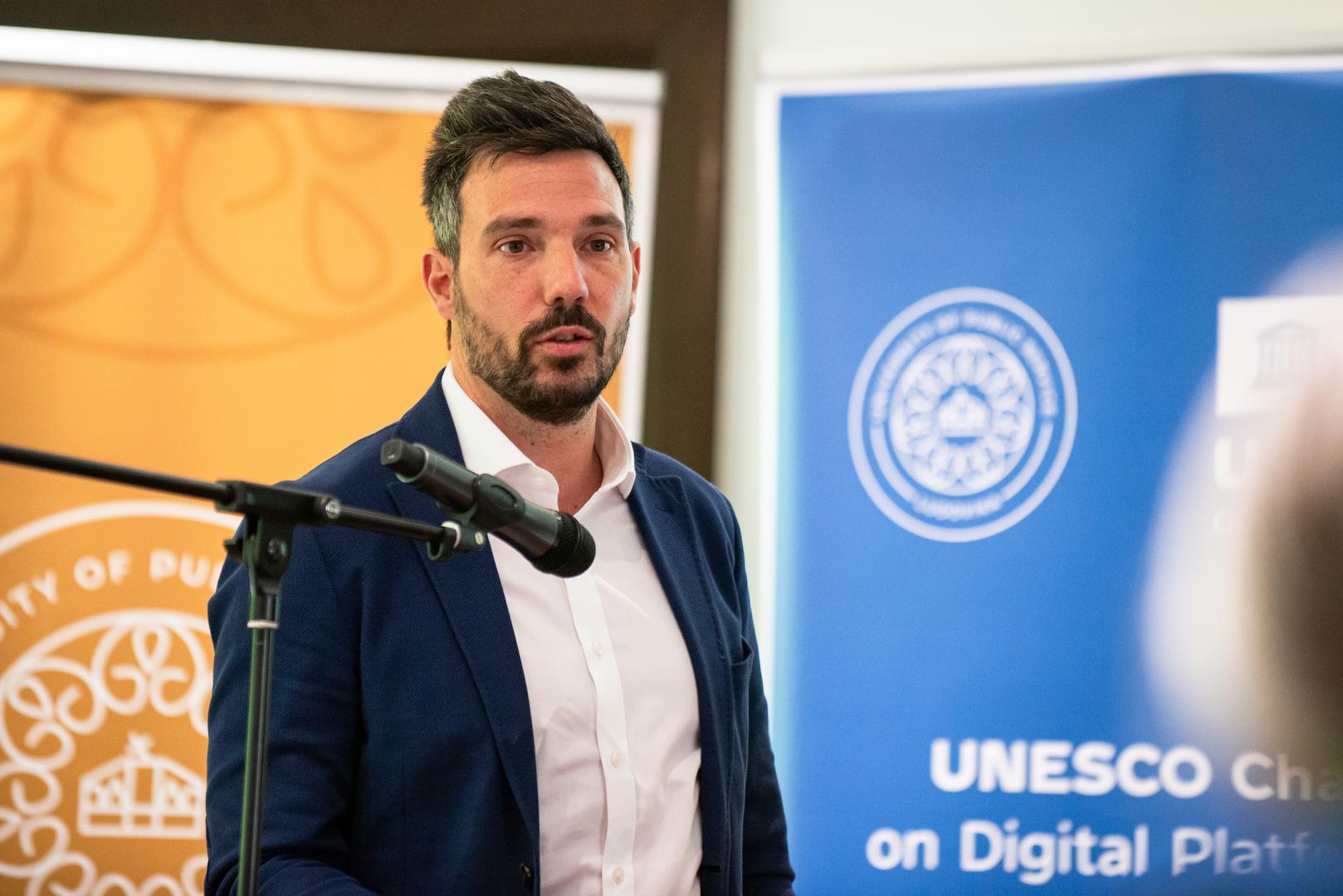


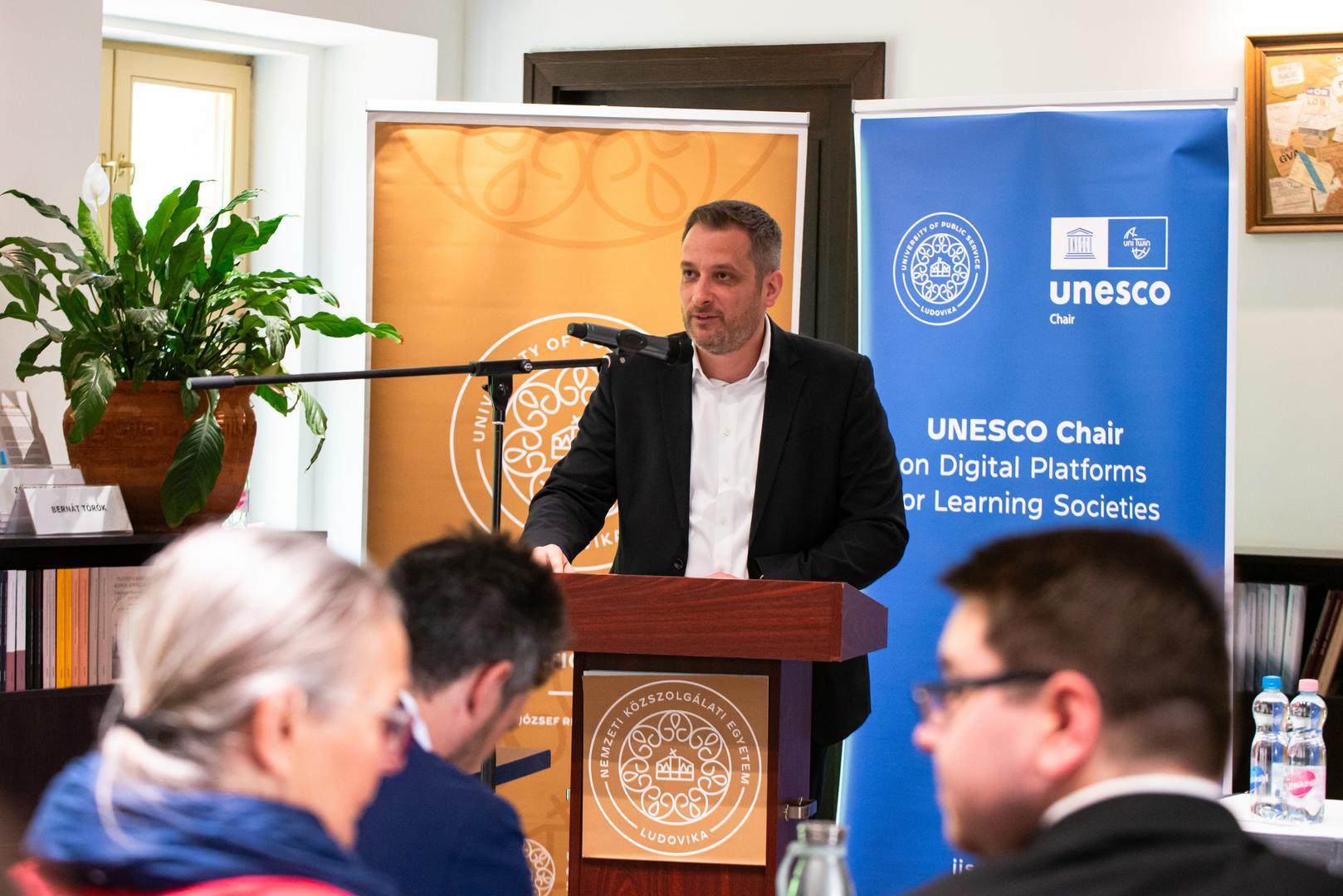
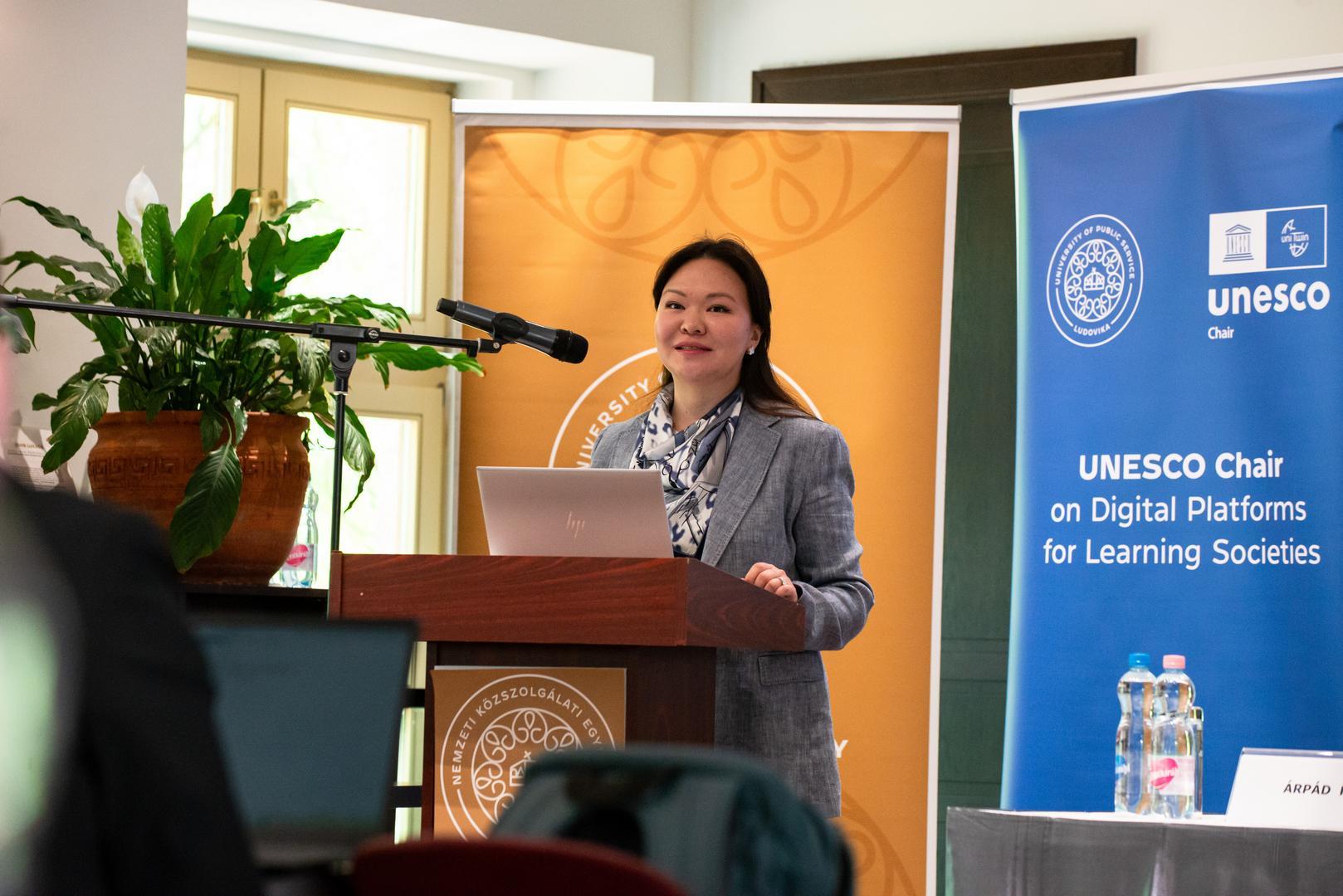


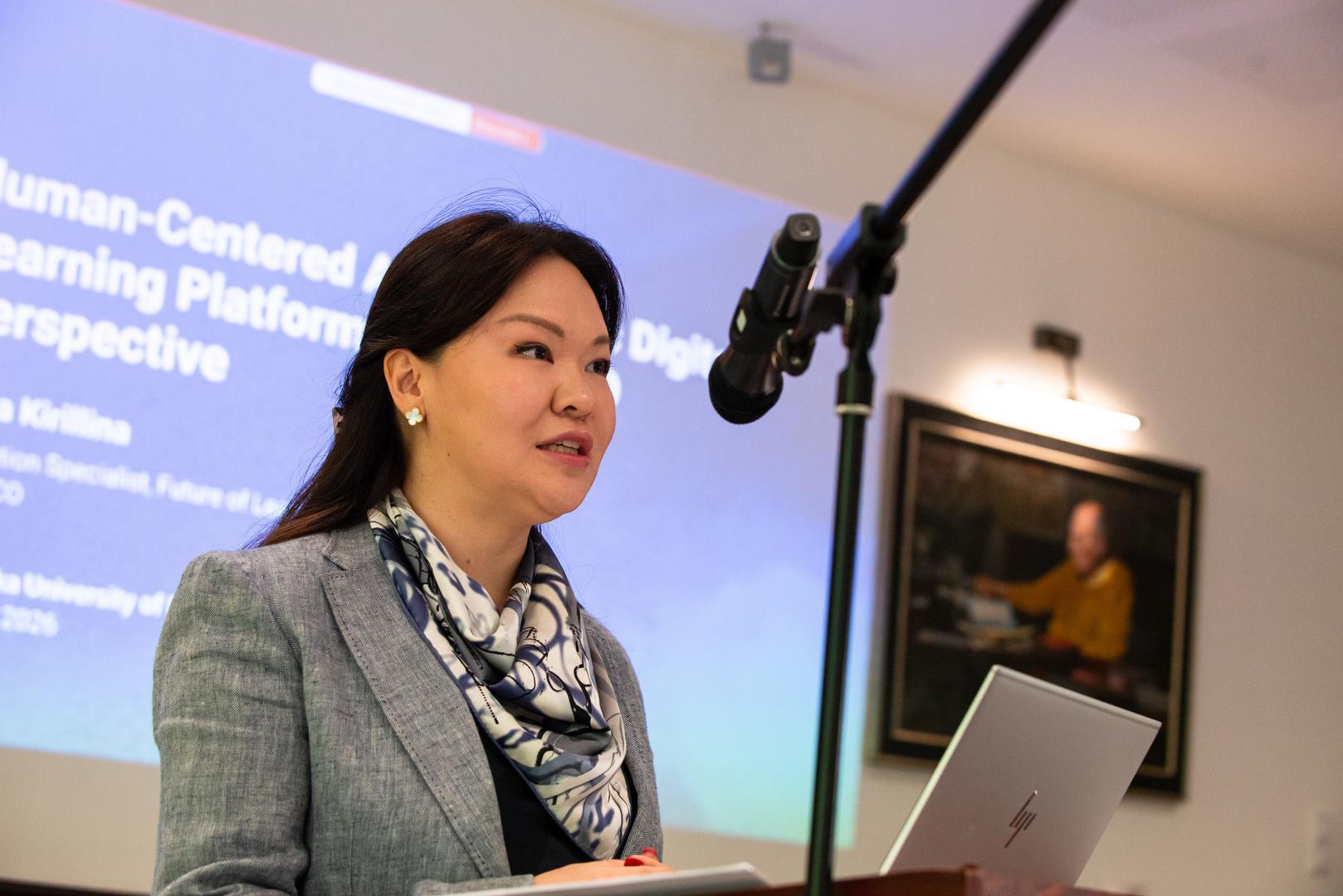

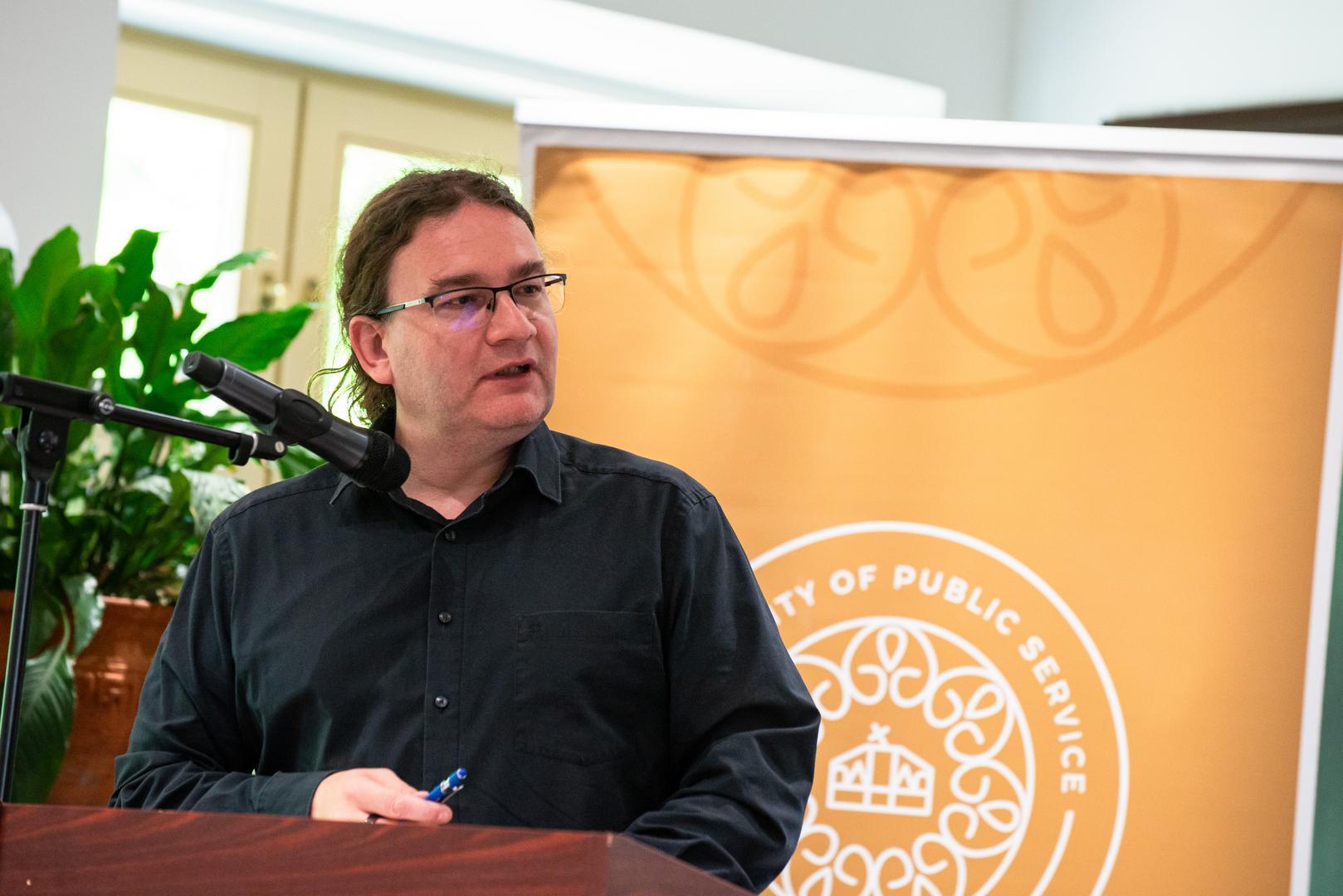





Generative artificial intelligence is creating a new media environment, said Alina Kirillina, an education specialist with UNESCO’s Future of Learning Innovation Team, in her presentation at the workshop titled Digital Skills and Critical Platform Use in the genAI Era, which was organized by the Institute of the Information Society (IIS), UNESCO Chair on Digital Platforms for Learning Societies on May 14.
According to Kirillina, in debates about the use of artificial intelligence in education, we must not overlook the social, environmental, and mental health costs of the technology. While more and more money is being spent worldwide on data centers and AI infrastructure, numerous problems persist on the human side: hundreds of millions of children lack access to education, and there is a significant shortage of teachers in many places. UNESCO’s position is that while new technologies are useful, they cannot replace investments in public education, teachers, and other infrastructure that develop the human side.
Kirillina therefore believes that policymakers, developers, parents, and teachers must work together to teach young people how to use technology responsibly.
UNESCO has outlined seven guiding principles for human-centered AI education: prioritizing students and learning, empowering teachers, protecting rights and privacy, promoting equality, reinforcing education as a public good, rethinking pedagogy, and transforming assessment systems. According to Kirillina, today there is also a need for tasks in which students analyze content generated by artificial intelligence, engage in verbal debate, and work in groups.
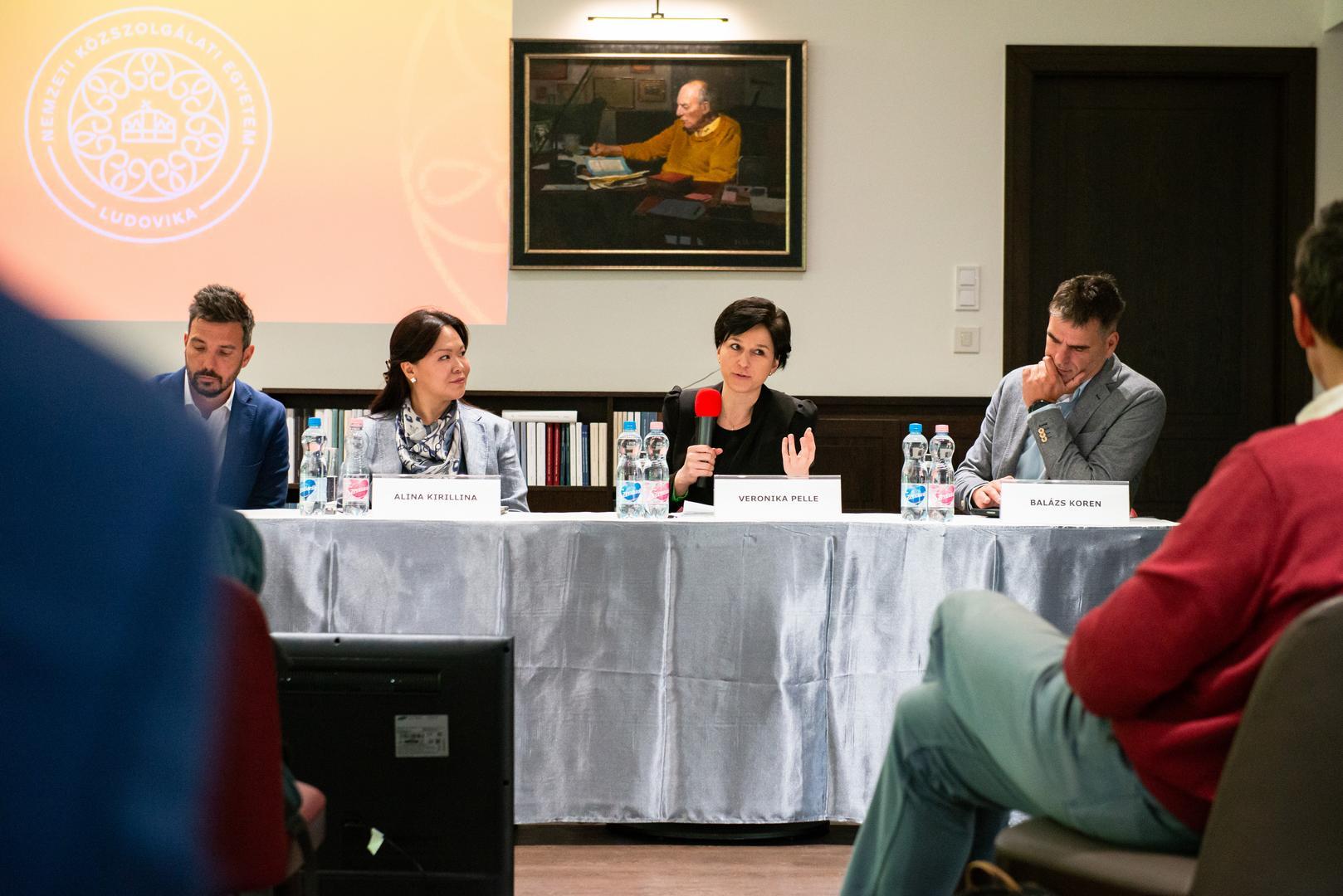
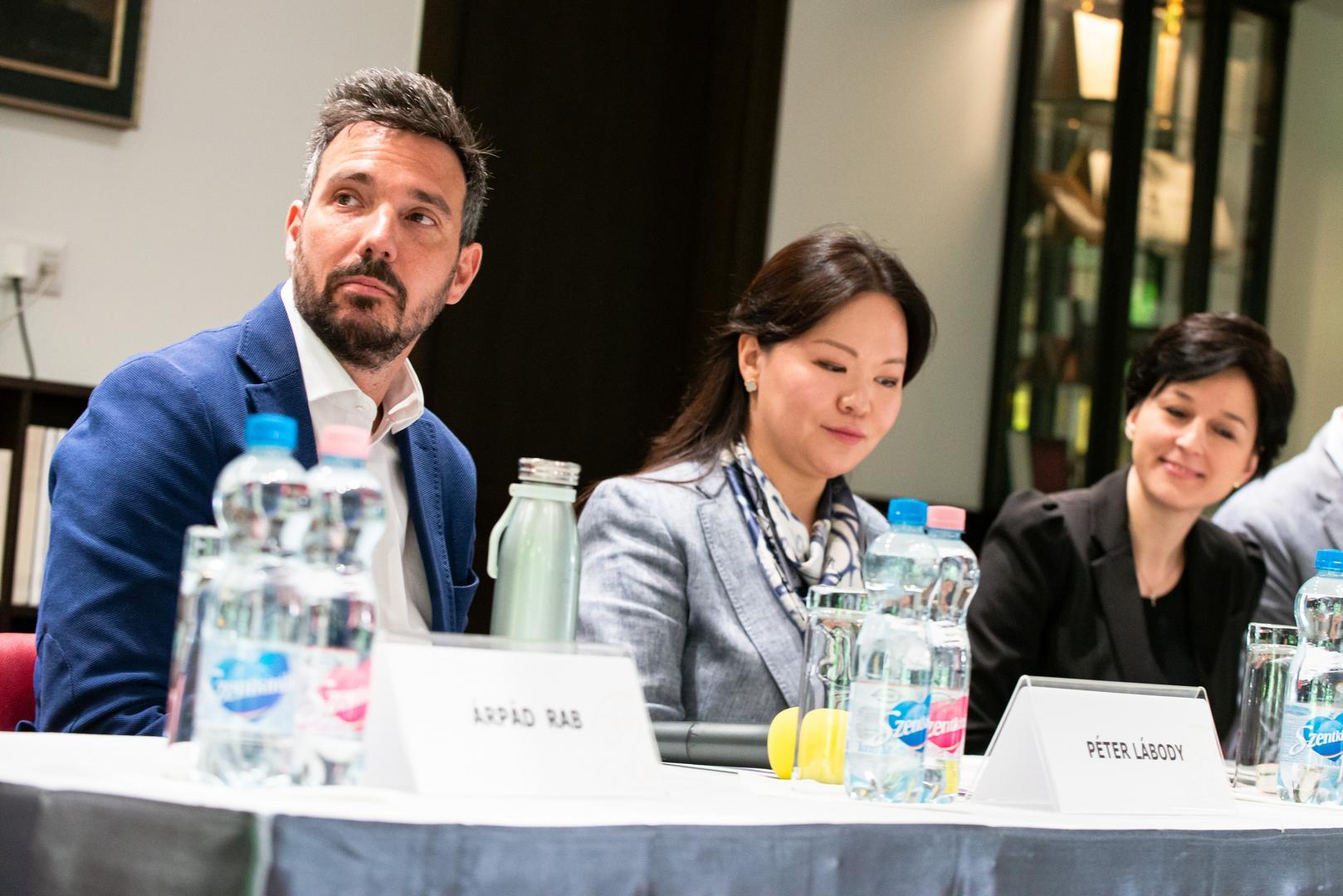
Árpád Rab, a senior research fellow at the Institute of the Information Society, moderated the panel discussion that followed the opening remarks by Bernát Török, director of the Institute of the Information Society, and the presentation by Alina Kirillina. During the discussion, Veronika Pelle, a media literacy specialist at the National Media and Infocomunication Authority, spoke about the expanding concept of media literacy. In traditional media, the user was primarily a recipient, so critical interpretation was the focus. With social media, however, everyone has also become a content creator, bringing with it a sense of responsibility and an ethical dimension. Generative AI has brought about another shift: in the world of deepfakes and synthetic content, we can no longer necessarily trust what we see or hear. Media literacy therefore requires both self-awareness and social skills.
According to Balázs Koren, senior specialist at the EdTech Coalition, there is no need to use artificial intelligence in education at all costs; rather, the question is what learning problem we are seeking to solve. In his view, teachers often turn to artificial intelligence because they don’t want to fall behind, but they should first clarify exactly what they want to teach better or improve. Artificial intelligence is not a value in and of itself. The teacher’s role is to demonstrate knowledge, critical thinking, and responsibility.
Péter Lábody, a researcher at the Institute of the Information Society and vice-president of the Hungarian Intellectual Property Office, approached the topic from the perspective of copyright and the creative industries. AI systems learn from human creations while generating content that could even compete with human works. The legal question, therefore, is who owns the content created in this way, and how to make the relationship between the training data and the resulting works transparent. According to their research, the majority of young people already use AI tools, yet they have only limited knowledge of the copyright implications.
A recurring dilemma is whether AI should be taught as a subject or as a tool. According to the panelists, both are necessary: students need to understand what AI is, who develops it, and what its economic, political, and social impacts are, while also learning to use the technology responsibly. Regarding ethical issues in research and higher education, the speakers agreed that transparency alone is not enough. Users must take responsibility for what they create with the help of artificial intelligence. This is because, while models accelerate and support, they do not replace human judgment and do not generate new ideas.
One of the central questions of the second panel discussion, moderated by Zsolt György Balogh, senior research fellow at the IIS, was how digital platforms are transforming under the influence of generative artificial intelligence. According to Alina Kirillina, the essence of this change is that platforms are no longer merely vehicles for consuming information, but have become infrastructures for generating knowledge. Previously, students conducted research in libraries or through search engines; today, with a single prompt, they can receive a summary in seconds, though they are often unable to assess the credibility of the information. This poses a problem because AI responses are increasingly becoming part of the decision-making process.
Current models represent the world in a linguistically and culturally unequal manner. Of the more than 7,000 known languages, only a few dozen appear on the most popular platforms. In the long run, this leads to cultural loss, as the oral traditions of indigenous communities may disappear from the digital space.
Ivana Stepanovic, a senior research fellow at the UNESCO Chair in Cultural Heritage Management and Sustainability at the Institute of Advanced Studies Kőszeg, highlighted the simulative nature of generative AI, pointing out that artificial intelligence also imitates cultural memory and social narratives. In her research, she examines AI-generated videos that reinterpret historical events or the past of the former Yugoslavia. These are often not authentic representations of the past, but rather aestheticized constructions serving ideological purposes. According to Stepanovic, society did not engage in a genuine debate; instead, AI emerged and began to reshape our perception of reality.
Nóra Falyuna, head of the Science and Society Research Group at LUPS, therefore emphasized the social responsibility of these platforms. In her view, the algorithms of large technology companies determine what we see and what we consider credible. AI systems summarize, interpret, and construct narratives, yet their operation follows market logic.
Iván Székely, a research professor at the Blinken OSA Archivum, drew attention to the issue of memory and archiving. In the age of generative AI, it is becoming increasingly difficult to distinguish between authentic and synthetic documents. At the same time, archives must preserve this artificially generated content as well, since it forms part of social reality. One of the most important questions for the future is therefore how archives can remain authentic sources when content is constantly subject to manipulation.
Regarding the regulation of AI, participants agreed that transparency and a human-centered approach are of fundamental importance. At the same time, several participants emphasized that current regulations are slow to respond to technological changes. For example, it took four years to develop UNESCO’s recommendations on AI ethics.
This is also problematic because, whereas machines used to try to mimic human communication, today people are increasingly beginning to behave in a machine-like manner. Alina Kirillina cited as an example the fact that the structures characteristic of chatbots are now frequently recognizable in young people’s communication. In connection with this, Ivana Stepanovic discussed how social media algorithms began reshaping human behavior years ago: influencers, for example, adapt their speaking pace and content structure to the logic of the platforms. According to Nóra Falyuna, in addition to prompt writing, users must also understand the social, economic, and political functioning of AI: they need to know where the data comes from, how the recommendation system works, and how artificially generated content can manipulate public discourse.
The environmental impact of AI was also discussed. According to the participants, its development and operation entail enormous energy and water consumption, while also requiring rare earth metals and massive data centers. According to Stepanovic, this dimension is often missing from debates on the ethics of AI, even though sustainability is a fundamental social issue.
Text: Orsolya Jancsó
Photo: Márk Benjámin Mészáros